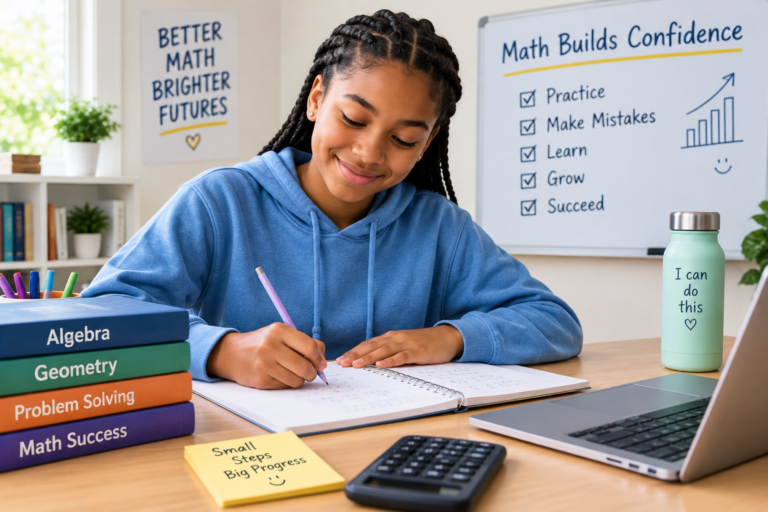
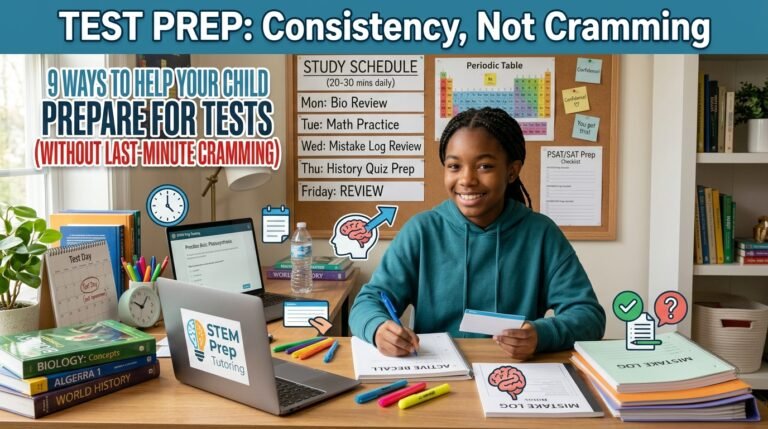
Mia sat at the kitchen table, staring at her math homework like it was written in another language. The numbers made sense, but once words entered the equation, her confidence vanished. “Why can’t they just ask the question straight?” she sighed. Her mom, Rachel, gave a helpless smile. Word problems felt like an enemy they couldn’t defeat.

That evening, Rachel decided something had to change. She wanted to help Mia face those tricky word problems without tears or frustration. Little did she know, she was about to discover seven simple ways that would completely change how her daughter saw math.
The Big Promise: Word Problems Don’t Have to Be Scary Forever
The next day, Rachel talked to a math tutor from STEM Prep Tutoring. The tutor smiled and said, “Word problems aren’t monsters — they’re just stories with numbers. Once kids see that, everything shifts.”
Rachel was skeptical but hopeful. The tutor explained that most middle schoolers struggle not because they don’t understand math, but because they panic when math hides behind words. That was the moment Rachel realized — they weren’t just solving for x, they were solving for confidence.

1. Start With the Story, Not the Numbers
The tutor’s first tip sounded almost too simple. “Ask Mia to forget the math at first,” she said. “Let her read the story like she’s reading a short paragraph.”
When Mia started treating word problems like stories, she stopped freezing up. She began picturing the situation — apples in baskets, runners in a race, or money saved in jars. Once she could imagine it, the numbers started to make sense.
Rachel even used bedtime stories to sneak in simple math talk. “If we had ten cookies and gave three away, how many are left?” Mia giggled — but she answered quickly.
2. Highlight the Key Words
The next trick was color-coding. With bright markers, Mia circled words like total, difference, each, or altogether. These clues told her what the question wanted.
Soon, reading a problem became like solving a fun mystery. Rachel watched her daughter’s confidence bloom. It reminded her of something she read on Edutopia — visual learning can dramatically improve comprehension and memory in kids. And in Mia’s case, it worked wonders.

3. Turn Confusion Into Conversation
Whenever Mia got stuck, Rachel stopped herself from answering. Instead, she asked, “What’s the problem asking you to find?” or “What do we already know?”
This small change sparked big results. It slowed Mia down, gave her time to think, and helped her learn to reason out loud — just like the online math tutor had taught her.
By the third week, math time became less of a battle and more of a team effort.
If you’ve ever wished someone could guide your child the same way, you can reach out to STEM Prep Tutoring to connect with expert tutors who make learning personal and fun.
4. Mix in Real-Life Math
Rachel realized that word problems didn’t only live in textbooks. Grocery shopping, cooking, and even planning family movie nights had hidden math lessons.
They calculated discounts, measured ingredients, and split pizza slices evenly. Suddenly, math wasn’t a school subject anymore — it was life itself.
Experts from Understood.org agree that connecting lessons to real-life examples helps children grasp complex ideas faster. Mia started to love the challenge.
5. Use Step-by-Step Systems
One day, the math tutoring instructor introduced Mia to a simple four-step process:
- Read the problem carefully.
- Underline key information.
- Write an equation that fits.
- Check if your answer makes sense.
They called it the “Read, Find, Solve, Check” routine. Repeating it built Mia’s confidence every single time. Even Rachel used it when helping her with tutoring in mathematics assignments. She noticed the structure gave Mia calmness — and calmness gave her clarity.
6. Build Vocabulary Power
Sometimes Mia stumbled, not because of math, but because of language. Words like remainder, product, or rate felt confusing. That’s when her reading comprehension tutor stepped in.
By working with a reading and writing tutor, Mia began understanding math language better. Her comprehension skills grew, and so did her confidence.
For children with learning differences or tutoring for dyslexia, this combination — reading and math tutoring — makes a huge difference. Rachel even bookmarked articles from the American Psychological Association that highlighted how confidence in reading strengthens problem-solving in math.
7. Celebrate Every Win, Big or Small
The best advice came last: celebrate progress.
When Mia solved her first tricky problem all by herself, Rachel threw a mini celebration. They danced in the kitchen. That small joy turned into motivation for the next challenge.
The physics tutor from STEM Prep Tutoring once told Rachel, “Confidence is the bridge between confusion and success.” And he was right — by the end of the semester, word problems weren’t scary anymore. They were just puzzles waiting to be solved.

What Rachel Learned About Word Problems
In the end, Rachel realized the magic wasn’t in the math alone. It was in the mindset. By guiding Mia patiently, using color, stories, and systems, she helped her daughter replace fear with curiosity.
Mia went from “I can’t do this” to “I can figure this out.”
And if you’re a parent watching your child struggle the same way, you don’t have to do it alone. Visit the STEM Prep Tutoring Blog for practical tips that work, or contact us here to meet the tutor who can help your child fall in love with learning again.