Every parent wants their child to succeed academically. However, success involves more than completing homework and earning good grades. Independent learning for students is equally important because it helps children develop the confidence, problem-solving skills, and responsibility needed to take ownership of their education.
Some students struggle to complete assignments without constant reminders, while others become frustrated when they encounter difficult questions. These challenges can make it harder for children to develop independent learning skills.
Independent learning for students means developing the ability to understand new concepts, solve problems, manage schoolwork, and recognize when additional help is needed.
Developing independent learning for students requires patience, consistent encouragement, and opportunities to practice new skills. Parents can support this process by allowing children to make decisions, explore different solutions, and gradually take responsibility for their academic progress.
Here are eight practical ways parents can encourage their children to become more independent learners.
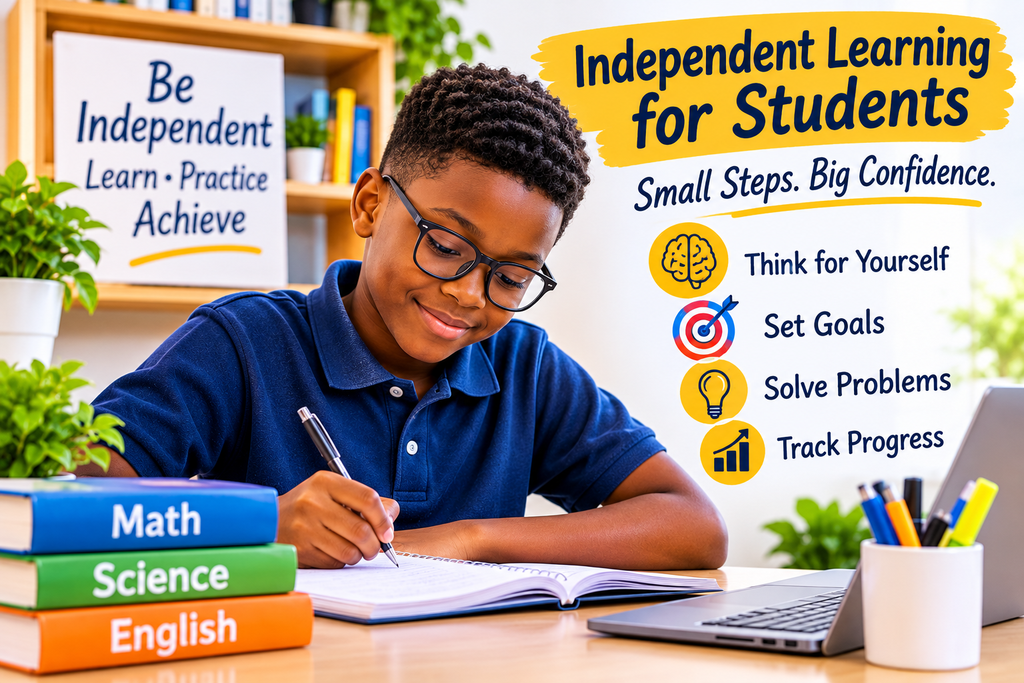
8 Ways to Encourage Independent Learning
1. Encourage Them to Try Before Asking for Help
When your child encounters a difficult question, encourage them to attempt it before providing the answer. Ask questions such as, “What do you already know?” or “How would you approach this problem?”
This helps children develop confidence and learn to think through challenges independently.
2. Help Them Set Academic Goals
Encourage your child to establish realistic learning goals, such as improving their mathematics skills, reading more frequently, or understanding a difficult science topic.
Setting clear goals helps children recognize their progress and take greater responsibility for their education.
3. Develop Their Problem-Solving Skills
Give children opportunities to solve problems independently. Encourage them to identify what they know, consider possible solutions, and review their answers.
Activities involving mathematics, reading comprehension, and everyday decision-making can strengthen these skills.
Helping children plan, monitor, and evaluate their learning can strengthen their ability to approach academic challenges independently. Learn more about metacognition and self-regulated learning
4. Create a Suitable Learning Environment
A quiet, organized study area can help children concentrate and complete assignments with fewer distractions.
Provide basic learning materials and encourage your child to organize their books, notebooks, and schoolwork independently.
5. Teach Them to Ask Better Questions
Help children identify exactly what they do not understand instead of simply saying a subject is difficult.
For example, encourage them to explain which part of a mathematics problem or science lesson is confusing. This makes it easier to identify learning gaps and find appropriate solutions.
6. Encourage Reading and Independent Research
Reading and research expose children to new ideas and information. Encourage them to explore age-appropriate books, educational websites, and reliable learning resources.
You can also ask them to explain something interesting they have recently learned. This helps develop curiosity and independent thinking.
Parents can also encourage children to become curious thinkers by exploring different ideas and asking meaningful questions. Explore Harvard’s Project Zero for educational resources on thinking and learning.
7. Allow Them to Learn From Mistakes
Children should understand that making mistakes is a normal part of learning. Instead of focusing only on incorrect answers, help them understand what went wrong and how they can improve.
Recognizing effort and progress also helps build confidence when approaching challenging subjects.
8. Gradually Reduce Supervision
Constantly reminding children about assignments and checking every answer can prevent them from developing responsibility.
Gradually encourage them to manage their homework, organize their learning materials, and track important deadlines. Adjust the level of responsibility according to their age and abilities.
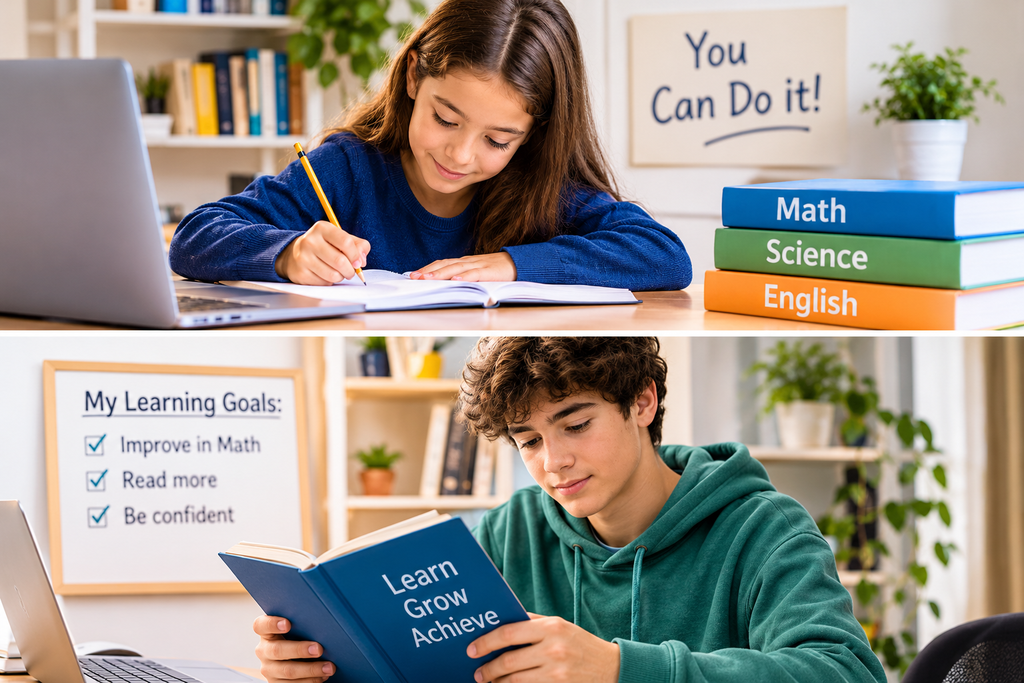
Common Mistakes Parents Should Avoid
While encouraging independence, parents should avoid:
- Completing assignments on behalf of their children.
- Expecting younger children to manage everything independently.
- Comparing their child’s academic progress with others.
- Focusing exclusively on grades rather than understanding.
- Making children feel uncomfortable about asking for help.
Remember, independent learning does not mean children should figure everything out alone. They still need guidance, encouragement, and appropriate academic support.
How One-on-One Tutoring Supports Independent Learning
Some students struggle with independent learning because they have gaps in their foundational knowledge or lack confidence in particular subjects.
Personalized tutoring can help address these challenges by providing individualized instruction and guidance.
At STEM Prep Tutoring, students receive one-on-one support in Math, English Language Arts, and Science. Our approach helps students strengthen their understanding, develop problem-solving skills, and become more confident learners.
We also offer dedicated PSAT and SAT preparation for students preparing for important academic assessments.
Final Thoughts
Helping your child become an independent learner takes time, patience, and consistent encouragement.
By developing problem-solving skills, encouraging curiosity, and gradually giving children more responsibility, parents can help them become confident and capable learners.
The goal is not to eliminate the need for support but to help children develop the skills to take ownership of their education.
Looking for personalized academic support?
Visit STEM Prep Tutoring to discover how our one-on-one tutoring services can help your child build stronger academic foundations and reach their learning goals.