The Challenge Parents See
Many parents notice that their children can memorise math facts or recite definitions in science. But they struggle when asked to solve a problem that requires deeper thought. The issue often isn’t the subject itself—it’s the lack of critical thinking skills in STEM. Students need to learn how to analyse, question, and connect ideas, rather than just recall them.

Why Critical Thinking in STEM Matters
STEM is not only about equations, experiments, or coding. It is about building the mindset to solve problems in clear and creative ways. Each STEM activity gives children chances to practice critical thinking skills. These skills help them:
- Break hard problems into smaller steps.
- Find patterns and test solutions.
- Use what they know in new situations.
In today’s fast-changing world, critical thinkers are more ready for both school success and real-life challenges. Edutopia notes that problem-solving and critical thinking prepare students for future innovation.
Critical Thinking in STEM: Real-Life Impact
At STEM Prep Tutoring, we see how focusing on critical thinking changes students. For example, one middle schooler struggled with multi-step math problems. She gained confidence after learning to organize her thoughts step by step. Soon, these skills helped her in science projects and reading tasks too.
This shows that critical thinking in STEM goes beyond one subject. It supports overall learning and builds confidence. The National Science Teaching Association explains how STEM fosters creativity and deeper understanding through critical thinking.
How Tutoring Builds Critical Thinking in STEM
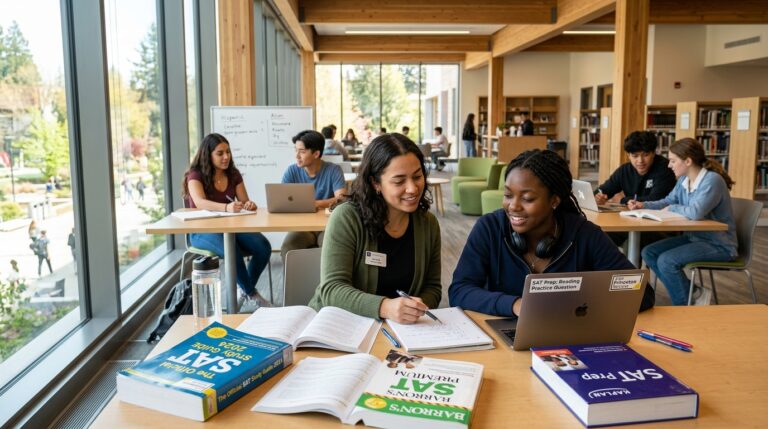
Tutoring gives students a safe space to practice these skills. Good tutors do not just provide answers. They ask guiding questions:
- “What information do you already know?”
- “Which strategy could you try first?”
- “How can you check if your answer makes sense?”
This approach builds independence and resilience. With practice, students start using these methods on their own.
The Ripple Effect of Critical Thinking in STEM
When students practice critical thinking, they:
- Worry less about tests.
- Share their ideas more clearly.
- Keep trying even when tasks are tough.
Parents often notice their children becoming stronger problem-solvers. A Brookings report also notes that critical thinking is one of the most needed skills today.
A Parent’s Role in Developing Critical Thinking
Parents can support growth by encouraging curiosity and patience. Ask your child to explain how they solved a problem. Give them time to try new ideas before stepping in. This builds the same skills tutors reinforce during lessons.
When parents and tutors work together, children get the best of both worlds—support at home and expert help in learning.
Final Thoughts
STEM subjects give the best chance to grow critical thinking—skills that last beyond the classroom. At STEM Prep Tutoring, we help students unlock this potential with personal, caring support.
When children master critical thinking in STEM, they are not only improving grades. They are learning how to succeed in life.
Ready to see your child thrive?
Book a free consultation with STEM Prep Tutoring today.
Explore our tutoring programs | Visit Our Blog Page