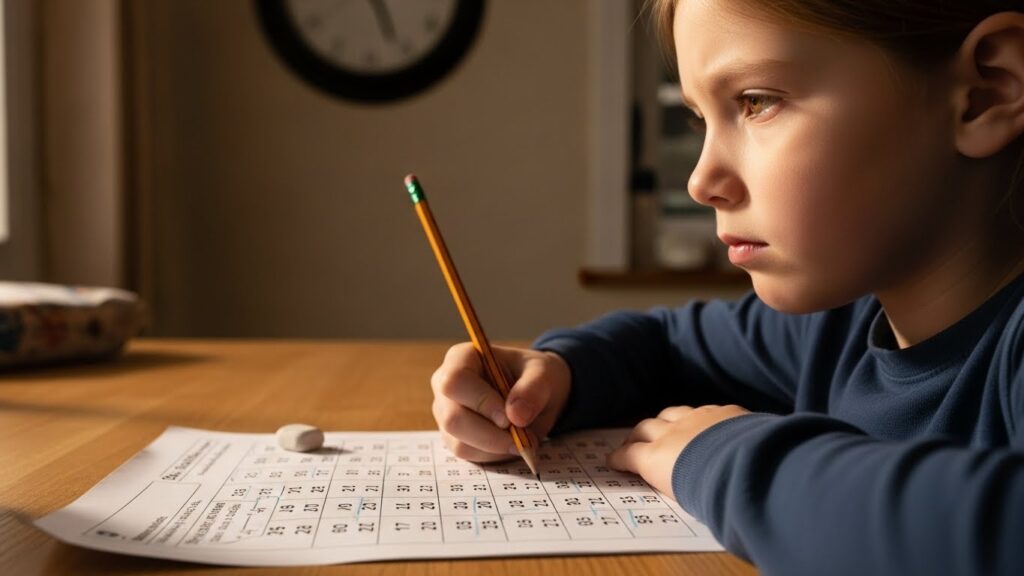
The kitchen felt quiet, yet the tension felt heavy. Jamal sat at the table, pencil hovering over his maths paper. He understood the lesson. Still, the answers did not show it. A missed sign. A skipped word. Once again, making careless mistakes turned good thinking into wrong results. For many parents, this moment feels all too familiar.
At first, it looks like rushing. Soon, it feels like carelessness. However, over time, worry takes over. Why does a capable child keep making careless mistakes even after trying so hard? That question often lingers long after homework ends.
As days passed, the pattern stayed the same. Reading tasks showed half-read questions. Science work showed strong ideas with small slips. Gradually, it became clear. Ability was not the problem. Something else blocked accuracy.
This story plays out in homes across the United States every day. Thankfully, making careless mistakes is common. Even better, it is also fixable.
What if making careless mistakes had nothing to do with intelligence?
That thought surfaced during a short chat at school pickup. Another parent shared how her son improved once a tutor helped him slow down. Suddenly, the problem felt different. Careless mistakes were not a flaw. Instead, they were signals.
At STEM Prep Tutoring, tutors see this pattern often. Students understand lessons. Yet they lose marks through small errors. This happens in maths, reading, and science. Therefore, the real task is to find what causes the mistakes.
When small errors quietly affect confidence
At home, Jamal’s mood changed with each marked page. Confidence dropped, even though effort increased. Slowly, frustration replaced curiosity. This shift matters. Children who keep making careless mistakes often stop trusting themselves.
Research shared by Understood.org explains that attention issues, slow processing, or learning differences can increase careless errors, even when understanding is strong.
That insight changed the tone at home. Instead of hearing “be more careful,” Jamal heard a better question. What support would help?
That question led to progress.
The turning point: learning that careless mistakes can be reduced
During a consultation, a learning specialist listened closely. Then she explained something reassuring. Most careless mistakes come from a few causes. These include rushing, weak memory, unclear steps, and pressure.
Each cause has a solution. Therefore, success does not require more pressure. It requires better systems.
Parents who want this kind of help often start by visiting STEM Prep Tutoring, where one-on-one tutoring focuses on how children learn.
How small changes led to five clear improvements
Progress came slowly but steadily. With guidance, Jamal’s accuracy improved. Each change supported the next.
1. Slowing down without lowering expectations
Jamal rushed through work. As a result, he missed details. The tutor introduced one habit. Read the question twice. Pause. Then answer.
In maths sessions, key numbers were underlined. Important words were circled. This method is common in math tutoring and tutoring in mathematics. An online math tutor often teaches this early.
Edutopia explains that self-checking reduces careless errors in problem-solving.
2. Making reading active and focused
During reading, Jamal skipped lines. A reading comprehension tutor noticed this quickly. Instead of silent reading, Jamal tracked lines with his finger. He paused often.

Reading tutors use this method during reading tutoring to improve accuracy. It also helps students working with a reading and writing tutor or a comprehension tutor. For learners needing tutoring for dyslexia, this reduces overload.
As a result, answers became clearer.
3. Supporting memory with simple tools
Some mistakes came from forgetting steps. To fix this, the tutor added checklists. In science, steps stayed visible. In maths, formulas stayed nearby.
This approach works well in physics and chemistry. A physics tutor or a specialist offering tutoring chemistry often uses a clear structure to reduce mental strain.
The American Psychological Association explains how reducing mental load improves focus and accuracy.
4. Creating a calmer routine
Noise increased mistakes. Clutter added stress. Therefore, Jamal’s study space changed. The desk stayed clear. Sessions followed a routine. Short breaks became normal.
These changes reduce pressure. They also help students prepare for PSAT 8/9, PSAT 10, and SAT exams.
Parents can find similar learning tips on our blog page.
5. Rebuilding confidence through feedback
Before, mistakes felt heavy. Now, feedback focused on patterns. Tutors explained what worked before fixing slips.
This approach builds trust. Children who feel safe check their work more carefully. Over time, careless mistakes reduce.
Understood.org confirms that positive feedback improves accuracy better than constant correction.
When learning becomes a shared effort

Over time, Jamal’s results changed. Homework took less time. Tests improved. Most importantly, learning felt lighter.
This progress came from support and consistency. Families seeking this help often reach out through our contact page to discuss personalised tutoring.
Whether a child needs a math tutor, reading tutor, or subject support, the right structure makes accuracy possible.
A quiet moment that mattered
One afternoon, Jamal handed over his worksheet without a fuss. Mistakes still appeared. However, they were thoughtful, not careless. That difference mattered.
Making careless mistakes had never defined him. They pointed the way forward.

A gentle next step for parents
If careless mistakes appear often at home, there is hope. Understanding comes first. Support follows next.
Parents can subscribe to learning tips, explore tutoring options, or start a conversation with an expert tutor. Small changes, applied with care, lead to lasting results.
Helping a child move past making careless mistakes starts with one simple belief. With the right guidance, success is within reach. The kitchen felt quiet, yet the tension felt heavy. Jamal sat at the table, pencil hovering over his maths paper. He understood the lesson. Still, the answers did not show it. A missed sign. A skipped word. Once again, making careless mistakes turned good thinking into wrong results. For many parents, this moment feels all too familiar.